Soft Enamel vs Hard Enamel Pins: Choosing the Right Finish for Custom Orders

Executive Summary
Choosing between soft enamel and hard enamel is one of the first decisions in a custom metal pin project. Although both processes use metal outlines to separate colored areas, they produce noticeably different surfaces, visual effects and price structures. The right choice depends on the artwork, intended use, required appearance and total order quantity—not simply on which process is described as more premium.
This white paper explains the practical differences between soft enamel vs hard enamel pins, including surface texture, artwork requirements, plating options, production considerations and quality inspection. It also outlines what buyers should evaluate when sourcing custom made lapel pins or placing custom enamel pins bulk orders.
Why the Enamel Finish Should Be Chosen Early
A metal pin begins with more than a finished logo. Before tooling can start, the artwork usually needs to be converted into a production-ready design that defines the metal outlines, recessed areas, color fields, plating and attachment position.
The selected enamel process influences how this conversion should be handled. A design prepared for a textured soft enamel surface may not produce the same result when changed to hard enamel. Small gaps, narrow metal lines and fine lettering can behave differently after color filling, polishing and plating.
For this reason, buyers should determine the desired surface effect before approving the mold artwork. Changing the finish after tooling may require artwork adjustments or, in some cases, a new mold.
The decision should begin with four questions:
- Should the colored areas feel recessed or smooth?
- How much fine lettering or small detail does the design contain?
- Is the pin intended as a promotional item, uniform badge, retail accessory or collectible?
- Which surface appearance best represents the brand?
What Are Soft Enamel Pins?
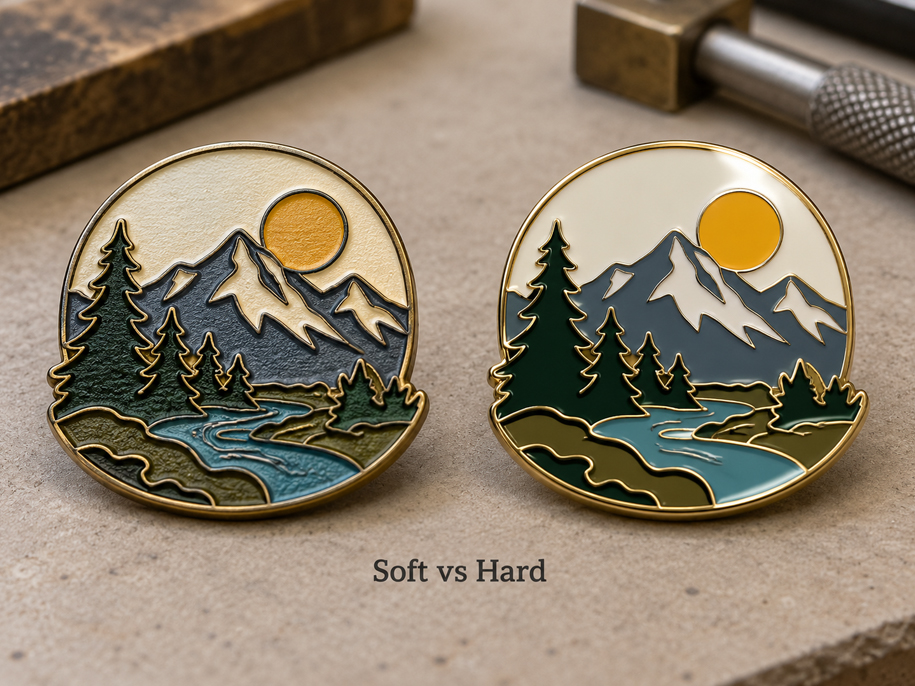
Soft enamel pins have colored areas that sit below the surrounding metal lines. Once the color is applied, the raised metal remains visible and can usually be felt when a finger moves across the surface.
This construction gives soft enamel pins a defined, dimensional appearance. Light reflects from the raised metal while the recessed color fields create shadows and contrast. Designs with bold outlines, separated colors and recognizable shapes often work particularly well with this finish.
The word “soft” refers to the enamel process and surface structure. It should not automatically be interpreted as meaning that the finished product is weak or unsuitable for regular use. Actual performance also depends on the base metal, plating, color application, pin thickness, attachment and how the product is stored or worn.
Soft enamel may be suitable for:
- Promotional pins and campaign badges;
- Event merchandise;
- Club and association pins;
- Collectible designs with visible metal outlines;
- Logos that benefit from a textured surface;
- Designs requiring strong contrast between metal and color.
An optional clear epoxy coating may sometimes be added over a soft enamel surface. This changes the texture and appearance, so the buyer should review a physical sample or a representative reference before approving it.

What Are Hard Enamel Pins?
Hard enamel pins have a smoother surface because the colored areas are filled and processed so that they sit closer to the level of the surrounding metal lines. The surface is then polished to produce a more uniform finish.
The result is generally cleaner and more jewelry-like than the recessed appearance of soft enamel. Hard enamel is often selected for branded merchandise, recognition pins, corporate lapel pins and retail accessories where a smooth surface is part of the desired presentation.
Hard enamel may be suitable for:
- Corporate and employee recognition pins;
- Retail accessories;
- Membership and commemorative pins;
- Brand merchandise with a refined appearance;
- Designs requiring a smooth face;
- Presentation sets and gift packaging.
Terminology should be confirmed with the manufacturer. In the custom pin market, “hard enamel” is sometimes used broadly for modern polished enamel processes, including imitation hard enamel. It should not automatically be treated as identical to traditional cloisonné. A quotation or production specification should state the actual process being offered.

Soft Enamel vs Hard Enamel Pins
The main difference between the two processes is the relationship between the colored areas and metal outlines. However, buyers should consider the complete design rather than deciding from surface texture alone.
| Evaluation point | Soft enamel pins | Hard enamel pins |
| Surface | Recessed colored areas | Smoother, more level surface |
| Touch | Noticeable raised metal lines | Flatter and more uniform |
| Visual effect | Dimensional and high-contrast | Clean and polished |
| Metal outlines | Strongly emphasized | Integrated into the smooth finish |
| Typical design style | Bold graphics and defined color blocks | Refined logos and retail-style designs |
| Production considerations | Color filling and surface inspection | Filling, leveling and polishing |
| Cost | Depends on specifications | May involve additional finishing work |
| Best choice | Determined by artwork and use | Determined by artwork and use |
Neither option is universally better. Soft enamel can offer stronger visual depth, while hard enamel can provide a smoother presentation. A buyer comparing soft enamel vs hard enamel pins should judge both options against the same artwork, size, plating and attachment.
How Artwork Influences the Result
Artwork preparation is one of the most important stages in producing custom made lapel pins. A logo created for a website, business card or printed brochure may contain elements that cannot be transferred directly into metal and enamel.
Metal lines and color separation
Enamel colors normally need to be contained within metal boundaries. If two enamel colors meet without a metal divider, the design may need to be revised. The required line width depends on the size, material and manufacturing method.
Lines that appear clear on a computer screen may become difficult to manufacture when reduced to a pin measuring only 25 or 30 millimeters. Production artwork should therefore be evaluated at the intended finished size.
Small text
Very small letters can lose clarity, especially when the font uses narrow strokes or tight spacing. A complicated typeface may need to be simplified, enlarged or converted into a different production method.
Instead of promising that one enamel finish is always better for small text, the manufacturer should review:
- Finished pin size;
- Letter height and stroke width;
- Spacing between characters;
- Plating color;
- Background color;
- Whether the text is raised, recessed or printed.
Gradients and photographic details
Traditional enamel is better suited to separated solid-color areas than to gradients, shadows or photographic images. When the design relies on tonal transitions, printing may be more appropriate. Some products can combine molded metal areas with printed details, but the construction should be agreed upon before tooling.
Number of colors
More colors do not necessarily create a better pin. Each color needs sufficient space and clear separation. Simplifying a complex logo can sometimes improve legibility and make the finished product more recognizable from a normal viewing distance.
Choosing the Base Metal and Forming Method
The enamel finish is only one part of the specification. Base metal and forming method also affect weight, shape, relief and edge quality.
Stamped metal is commonly considered for designs with defined raised and recessed areas. Die casting can be useful for more complex shapes, deeper relief or cut-out structures. Material options may include iron, brass, copper, zinc alloy or aluminum, depending on the design and manufacturing process.
The correct choice depends on:
- Finished size and thickness;
- Two-dimensional or three-dimensional relief;
- Number and shape of cut-outs;
- Required edge structure;
- Target weight;
- Plating and surface treatment;
- Order quantity and budget.
Buyers do not necessarily need to select the metal without assistance. A better approach is to provide the artwork, target use and expected appearance, then request a clearly written recommendation.
How Plating Changes the Design
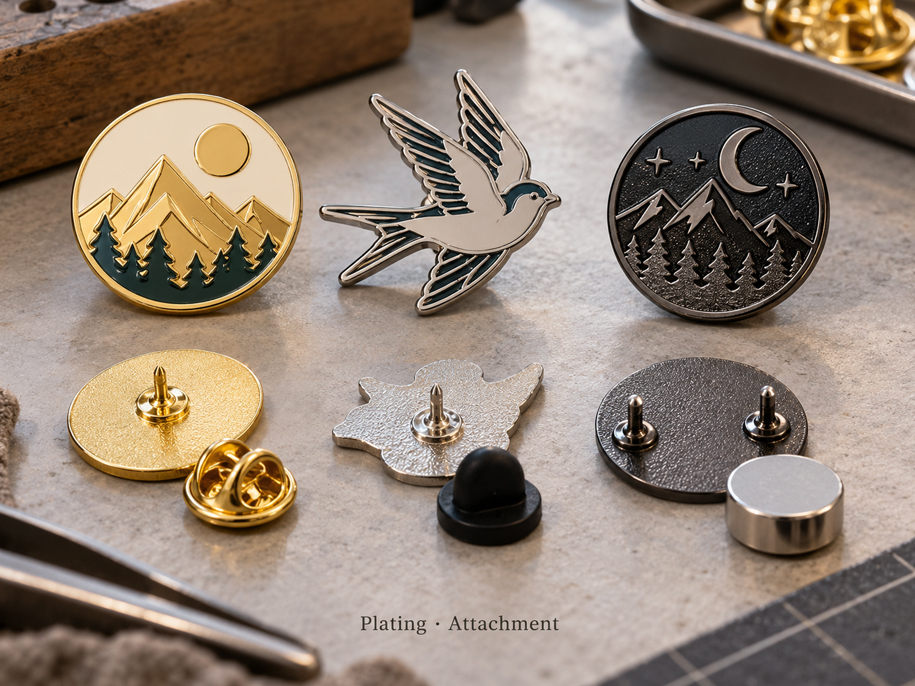
Plating is not only a technical finish; it becomes part of the artwork. Gold, silver, nickel, black nickel, copper and antique-style finishes can create very different results from the same enamel colors.
Bright plating increases reflection and can make raised metal lines more prominent. Dark plating may create stronger separation around light colors. Antique finishes can emphasize recessed areas, particularly in designs with relief and limited enamel.
Buyers should remember that “gold plating” describes a surface appearance or plating specification. It does not mean that the badge is made from solid gold. The quotation should identify both the base material and the selected finish.
For color-sensitive projects, digital images alone may not provide an accurate representation because screens, lighting and camera settings can alter the appearance. A physical sample or approved plating reference is more reliable.
Selecting the Right Pin Attachment
The backing attachment should be chosen according to how the pin will be worn or displayed. Common options include metal butterfly clutches, rubber clutches, safety-pin fittings, magnets, screws and other jewelry-style attachments.
A standard clutch may be suitable for small lapel pins, while a larger or heavier badge may require two attachment points to reduce rotation. Magnets can avoid puncturing some fabrics, but their holding strength and intended environment should be evaluated. Safety-pin fittings may be more suitable for certain uniforms, name badges or temporary event applications.
For custom made lapel pins, attachment selection should not be left until the final production stage. The attachment position affects balance, orientation and comfort.
Planning Custom Enamel Pins Bulk Orders
A bulk order should not be treated as a small sample multiplied by a large number. As quantity increases, consistency, packaging and approval procedures become more important.
Before placing custom enamel pins bulk orders, buyers should confirm a written specification covering:
- Finished dimensions and thickness;
- Base material;
- Soft or hard enamel process;
- Plating color and surface finish;
- Enamel colors or approved color references;
- Front and back design;
- Attachment type and quantity;
- Individual or bulk packaging;
- Quantity per carton;
- Required inspection points;
- Approved artwork and sample status.
The quotation should also clarify which features affect the price. These can include mold complexity, product size, metal thickness, number of enamel colors, special plating, additional attachments, individual packaging and order quantity.
Selecting the lowest unit price without comparing specifications can produce misleading results. Two quotations may describe pins that look similar in a thumbnail but use different materials, thicknesses, attachments or inspection standards.
Pre-Production Sample Approval
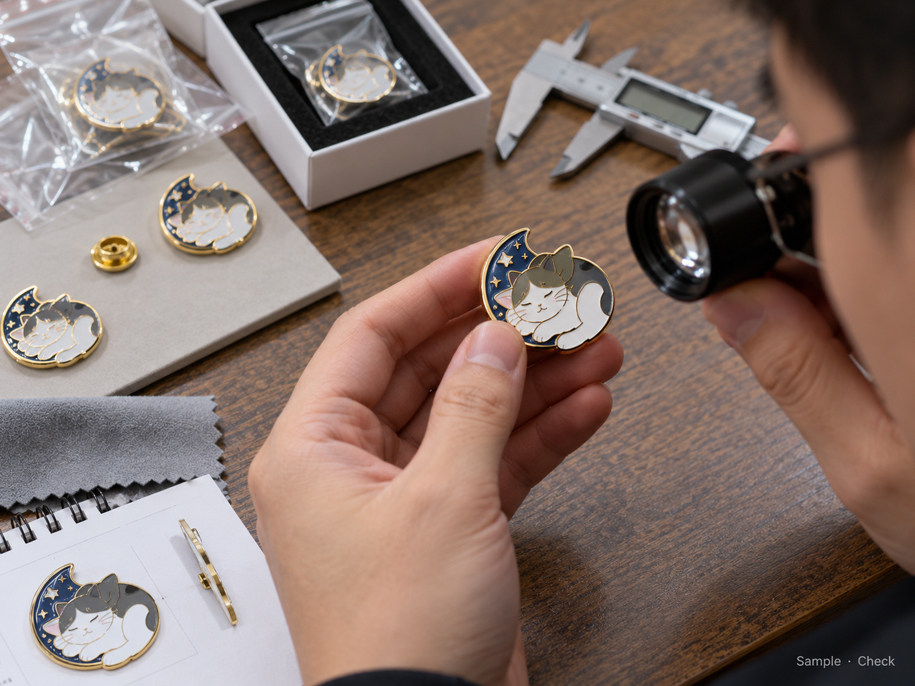
A pre-production sample gives the buyer an opportunity to evaluate the real relationship between the artwork and the manufacturing process. It is particularly valuable for new designs, color-sensitive branding and large orders.
The sample should be checked under neutral lighting and, where possible, compared with the approved production drawing. Buyers should inspect:
- Overall size, shape and orientation;
- Clarity of lettering and small details;
- Enamel placement and color separation;
- Surface texture and polishing;
- Plating coverage and consistency;
- Edges, cut-outs and corners;
- Attachment position and security;
- Front and back surface condition;
- Packaging and protection from scratching.
Photographs can support the approval process, but they may not show exact color, weight, texture or minor surface differences. For high-priority orders, a physical sample provides a more dependable reference.
Frequently Asked Questions
Which process is better for a detailed logo?
It depends on the type of detail. Fine metal lines, small color fields and tiny lettering should be reviewed at the finished size. Some elements may need to be simplified or printed regardless of the enamel finish.
Are hard enamel pins always better quality?
No. Hard enamel and soft enamel produce different surfaces. Quality depends on whether the product matches the approved specifications and whether filling, plating, polishing, attachments and packaging are properly controlled.
Can soft enamel pins have a smooth surface?
A clear epoxy coating may create a smoother covering over recessed enamel, but it will produce a different appearance from a polished hard enamel surface.
Can the same design be produced in both finishes?
Many designs can, but the results will not look identical. The artwork may require adjustment, and mold compatibility should be confirmed before production.
What should buyers provide when requesting a quotation?
Provide the logo or artwork, required size, quantity, preferred finish, plating, attachment, delivery destination and intended use. If some details are uncertain, the supplier can recommend a production specification for review.
Conclusion
The decision between soft enamel vs hard enamel pins should be based on the design’s structure, desired surface, intended use and purchasing requirements. Soft enamel emphasizes raised metal and tactile depth, while hard enamel provides a smoother and more polished appearance. Neither process should be selected from price or terminology alone.
For custom made lapel pins, artwork preparation, plating and attachment selection are just as important as the enamel finish. For custom enamel pins bulk production, a complete written specification and an approved sample help establish a consistent reference before the full order begins.
Green House can review the original artwork and recommend an appropriate enamel process, material, plating and attachment. Confirming these details before tooling provides a clearer route from the initial logo to a finished metal pin that meets its intended purpose.
Related Article