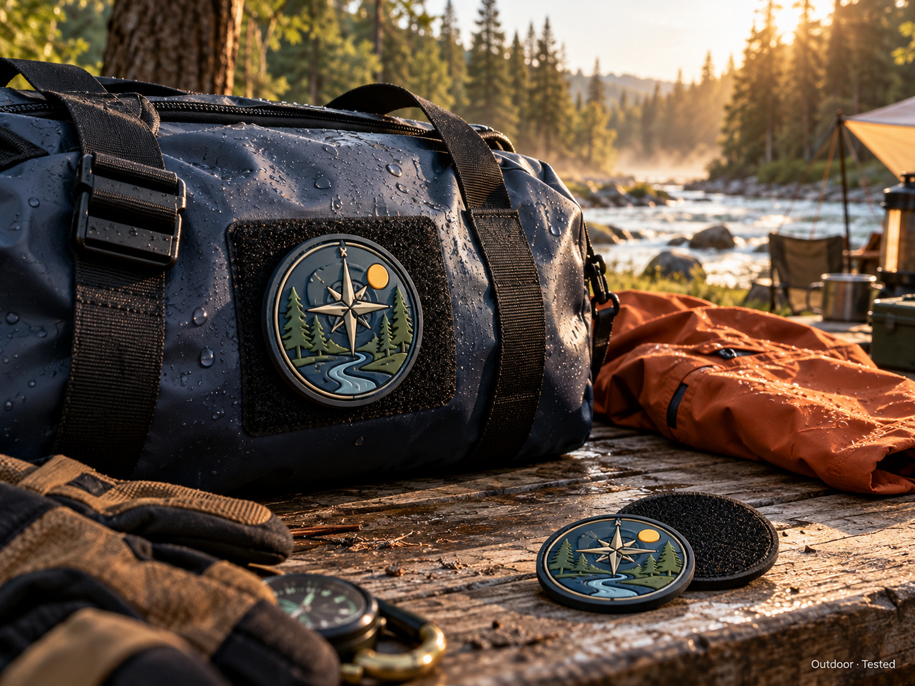
Iron-On vs Sew-On Patches: Which Backing Is Right for Your Order?
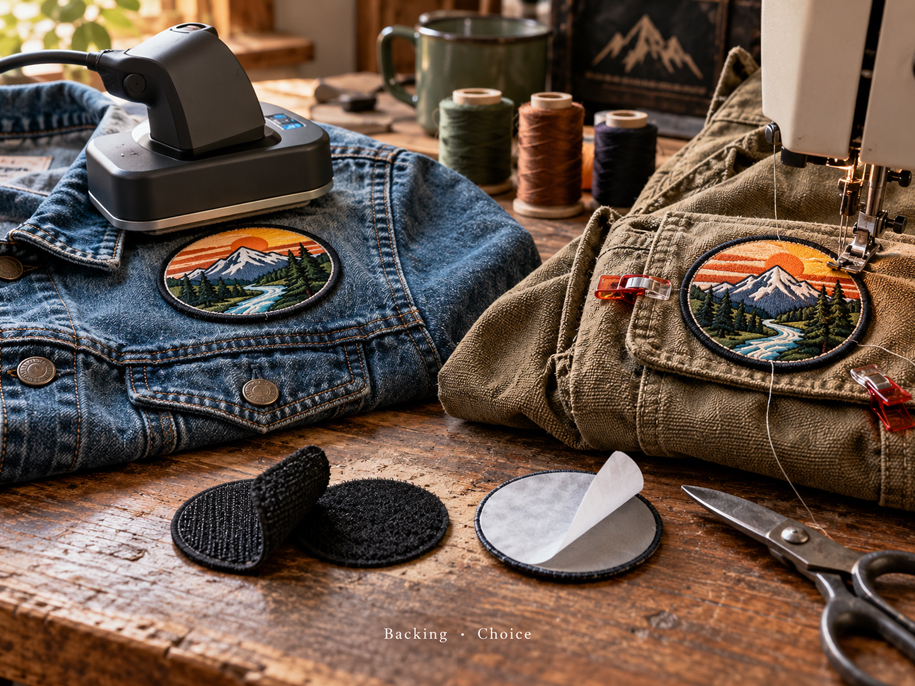
The front of a custom patch carries the logo, colors and message, but the back determines how the patch becomes part of the finished product. A backing that works well on a cotton jacket may be unsuitable for a coated nylon bag. A permanent uniform patch has different requirements from an identification patch that must be removed and replaced.
For buyers comparing iron on vs sew on patches, the correct choice depends on more than convenience. Fabric construction, heat sensitivity, washing conditions, application equipment and the need for removal all affect the decision. Hook-and-loop and pressure-sensitive adhesive also have useful roles, but they solve different problems. This white paper compares the main patch backing types from a purchasing and production perspective.
Start With the Finished Product
Backing should be selected before production. The supplier needs to know where the patch will be placed, how it will be attached and how the finished item will be used.
Before selecting a backing, buyers should answer four questions:
- What material will carry the patch, and can it safely receive heat?
- Will the item be washed or handled frequently?
- Does the patch need to be permanent or removable?
- Who will apply it, and what equipment is available?
The answers help determine whether heat application, sewing, hook-and-loop or temporary adhesive is the most appropriate choice.
Iron-On Backing
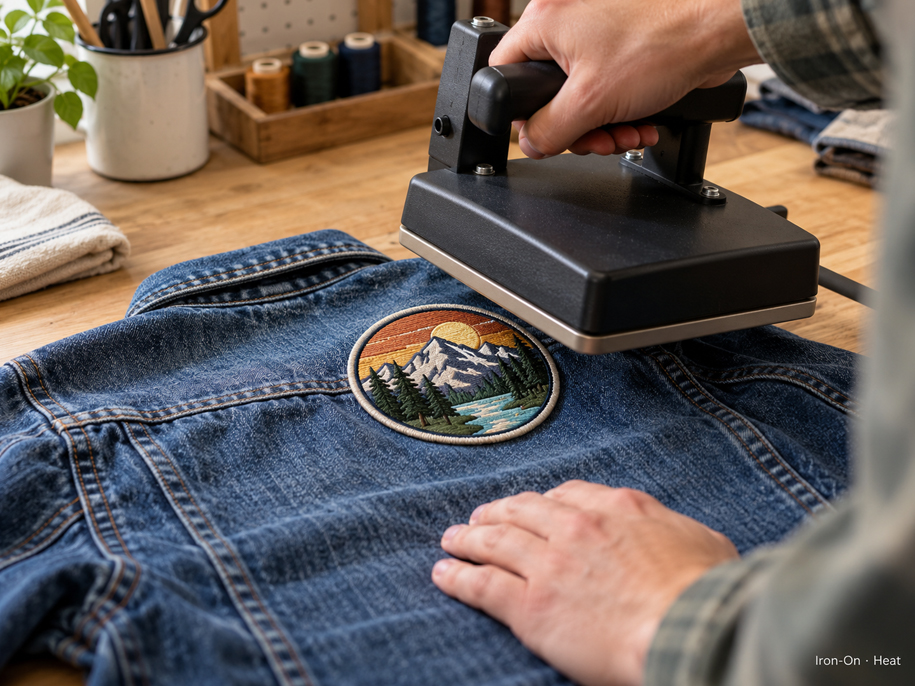
An iron-on patch has a heat-activated adhesive layer on the reverse. Heat and pressure soften the adhesive and bond the patch to a compatible textile surface. This can reduce manual sewing work and make placement easier, especially when many patches must be positioned consistently.
The result depends on the entire application process. Temperature, pressure and time must suit the adhesive and the base material. Too little heat or pressure can leave weak areas around the edge, while excessive heat can affect the garment, surface finish or patch.
Fabric compatibility is essential. Many stable, heat-tolerant fabrics can accept an iron-on application, but coated, delicate, elastic or heat-sensitive materials require additional care. A surface finish may also interfere with the adhesive, so the complete assembly should be sampled.
Iron-on backing works best when the buyer wants a simple application process and the garment can safely accept heat. It should not automatically be described as permanent or suitable for every washing routine.
Sew-On Backing
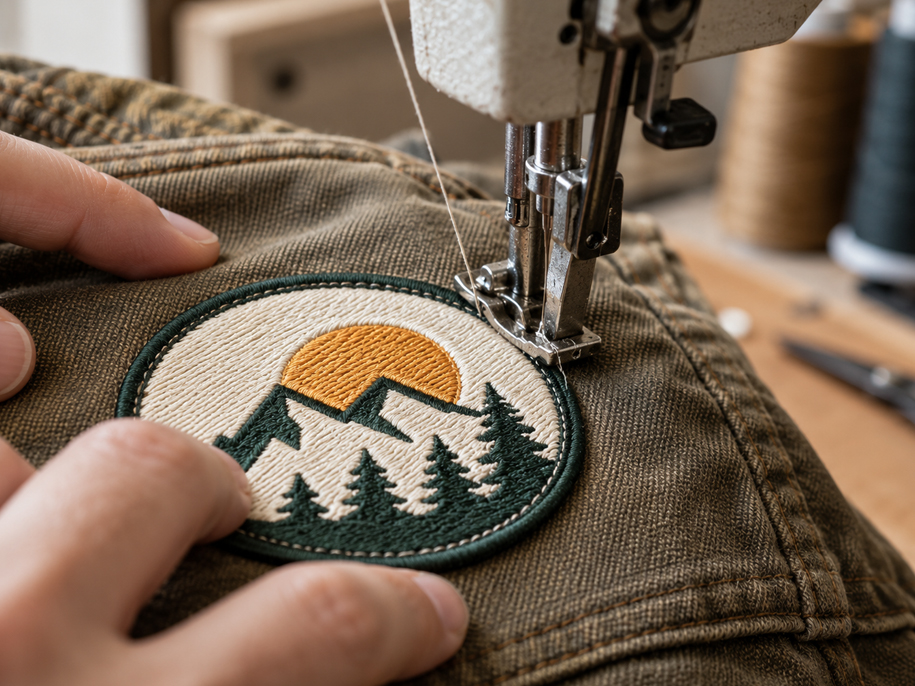
A sew-on patch is attached mechanically with thread. It does not depend on a heat-activated adhesive, so it is often considered when the garment cannot safely receive heat or when long-term attachment is the priority.
Sewing can work on jackets, uniforms, bags, caps and other products that allow a needle to pass through the material. However, stitching can leave needle holes, compress a padded surface or create puckering when the fabric, thread tension and patch construction are not compatible. Curved products such as caps should be sampled because they do not behave like flat fabric panels.
When comparing iron on vs sew on patches, sew-on is a useful starting point for frequently handled items or materials that should not be heated. It can be removed by cutting the stitches, although needle marks may remain.
Iron-On and Sew-On at a Glance
| Decision factor | Iron-on backing | Sew-on backing |
| Attachment | Heat and pressure | Thread holds the |
| method | activate the adhesive | patch to the item |
| Application speed | Often faster when suitable equipment is available | Often faster when suitable equipment is available |
| Fabric requirement | The surface must accept heat and form a reliable bond | The surface must accept heat and form a reliable bond |
| Removal | Removal may leave adhesive residue | Stitches can be cut, but needle marks may remain |
| Typical applications | Heat-compatible apparel and controlled application | Uniforms, bags, caps and long-term attachment |
| Main approval risk | Weak bonding or heat damage | Puckering, poor placement or visible stitching issues |
This comparison is a starting point, not a universal performance guarantee. The same backing may behave differently on two fabrics that appear similar.
When Hook-and-Loop Makes More Sense
Some projects need interchangeable identification rather than permanent attachment. In these cases, hook-and-loop can be more practical than heat application or sewing.
Buyers often search for this option as velcro patch backing. Velcro is a brand name; the general technical description is hook-and-loop backing. The patch normally carries one side of the system and attaches to a compatible panel on the garment or equipment.
The order should state whether the matching side is required. Some uniforms and bags already have a loop panel, while others need both components. Hook-and-loop adds thickness, but it allows removal, repositioning and replacement.
The attachment area should also be considered. If the hook-and-loop section is significantly smaller than the patch, unsupported edges may lift or catch during use. A correctly sized system helps the patch sit more evenly on the finished item.
Where Adhesive Backing Fits
Pressure-sensitive adhesive is another option among common patch backing types. The release liner is removed, and the patch is pressed onto a clean surface.
This backing is useful for temporary positioning, packaging, event use, presentation samples or selected hard surfaces. It should not be treated as a direct replacement for iron-on or sew-on attachment because fabric movement and washing can exceed what a temporary adhesive was designed to withstand.
Before choosing adhesive backing, the buyer should define the intended surface and service period. If the real requirement is long-term attachment to clothing, sewing, heat application or hook-and-loop will usually be a more appropriate starting point.
Match the Backing to the Fabric
Backing selection becomes easier when the base material is considered first:
- Cotton and denim: Iron-on and sew-on may both be possible, subject to sample testing.
- Polyester and blended fabrics: Heat tolerance and surface treatment should be checked before heat application.
- Nylon and coated fabrics: Sewing or hook-and-loop may be safer starting points when heat could affect the material or coating.
- Stretch fabrics: Movement can place stress on a rigid patch or adhesive edge, so the complete assembly should be tested while stretched and relaxed.
- Caps and structured products: Curvature and access for application equipment may favor sewing.
- Uniforms and tactical gear: Permanent identification may favor sew-on, while interchangeable identification may favor hook-and-loop.
These are screening principles rather than fixed rules. Fabric labels do not reveal every finish or coating that may affect attachment.

What Buyers Should Confirm Before Production
A clear purchase specification reduces avoidable revisions. Green House recommends confirming the following information before approving the order:
- Patch type, finished size and border construction.
- Backing type and any matching hook-and-loop material.
- Garment material, coating and placement area.
- Application method and available equipment.
- Expected care conditions and an approved attached sample.
The sample should be evaluated after application, not only when it arrives loose from the factory. Buyers should inspect edge contact, alignment, fabric distortion and flexibility. If the product will be washed, the trial should use the planned care method.
Frequently Asked Questions
Can You Sew On an Iron-On Patch?
In many cases, yes. The adhesive can position the patch before stitching, while the stitches provide mechanical attachment. The garment must tolerate both heat and needle penetration.
Can Iron-On Patches Be Washed?
Washability depends on the adhesive, fabric, application process and care conditions. Avoid promising a fixed number of washes without testing the actual patch-and-garment assembly.
Which Backing Is Better for Uniforms?
Sew-on suits permanent identification. A velcro patch backing, more accurately called hook-and-loop, is useful when names, roles or unit identifiers must change.
The choice should also consider how the uniform will be cleaned, whether it already has a loop panel and whether the patch needs to be removed before washing.
What Is the Best Backing for Jackets?
Heat-compatible casual jackets may accept iron-on patches. Work jackets, coated outerwear and frequently washed garments may be better candidates for sewing or hook-and-loop.
No backing should be selected from the jacket name alone. The actual fabric, coating, placement and care method must be checked.
Choose the Attachment Before Final Approval
The decision between iron on vs sew on patches should be based on the finished product. Iron-on can simplify application on compatible fabrics. Sew-on provides mechanical attachment, hook-and-loop supports replacement, and pressure-sensitive adhesive is better reserved for temporary use.
The most reliable order begins with the actual fabric, application method and use conditions. Once those details are known, the buyer and supplier can select the backing, prepare a representative sample and approve the complete assembly before mass production.

Related Article