Pin Collecting: A Time-Honored Tradition at the 2024 Olympics
author: Jennifer
2024-11-26
At the recent Olympics, we could see a collectible becoming increasingly popular among athletes, coaches, officials, and fans: a pin.
Pins are small, enamel badges that are traded among those attending the Olympics. They are often designed to represent certain sports, events, or countries. The act of pin collecting, or trading, is a favorite among many and has been a time-honored tradition since the Games first began.
The origin of pin collecting can be traced back to the 1896 Olympics, held in Athens, Greece. At these Games, athletes were given commemorative pins, such as a small piece of ribbon with a medal attached, as a reminder of their participation.
Over time, the design and crafting of pins evolved. Instead of being strictly commemorative, the pins became more artistic and a representation of the countries participating in the Games. Pins were viewed as a way to allow people to connect with each other from all over the world.
The production of pins has become a major industry, with many companies creating pins designed for this specific purpose. The process of creating a pin is intricate and complex, requiring a lot of attention to detail. The design is first created on paper, then transferred to an etching machine where it is stamped onto a brass mold. The pin is then coated with enamel before being baked at high heat to seal it in.
The use of pins has expanded beyond just a souvenir. At Olympics games modern day sporting events, pins can be used to trade, to show support for a particular country or team, or to commemorate special events within the Games such as the lighting of the torch or the start of a new event. Pins also have been used to raise money for charitable organizations and have provided a source of income for athletes and specialized teams.
Pins have become such an important part of the Olympic tradition that they have their own area of importance at the Games – the Pin Trading Centers. These Centers, dedicated specifically for pin trading, are open to athletes, fans, and anyone interested in exploring the world of pins. They are set up to provide a fun and friendly space for collectors to swap their pins, showcase their collections, or simply chat about common interests.
Some countries are known for specific pin designs while other countries may design their pins to be unique and different every year. Pin collecting has become a way for groups to not only express themselves but also to bond with others. The pin helps to create memories that can be passed down from generation to generation.
For the 2024 Olympics, the badge design was released as the Olympics approached and included a unique design representing the spirit of the Olympics. These designs facilitate transactions between athletes, coaches, and fans from around the world, enhancing a sense of community and family among participants.
While the actual design and production of pins may have changed over the years, pin collecting has remained an essential part of the Olympics tradition. It is a fun and engaging way for individuals to connect with one another and a tangible way for participants to hold on to special memories from the Games.
In addition to the Olympics, pins are also collected by other organizations, such as political campaigns, charities, and sporting events. As a result, pins continue to be a special and highly sought-after collectible that brings people together and promotes the values of collaboration, sportsmanship, and community.
Pins are small, enamel badges that are traded among those attending the Olympics. They are often designed to represent certain sports, events, or countries. The act of pin collecting, or trading, is a favorite among many and has been a time-honored tradition since the Games first began.
The origin of pin collecting can be traced back to the 1896 Olympics, held in Athens, Greece. At these Games, athletes were given commemorative pins, such as a small piece of ribbon with a medal attached, as a reminder of their participation.
Over time, the design and crafting of pins evolved. Instead of being strictly commemorative, the pins became more artistic and a representation of the countries participating in the Games. Pins were viewed as a way to allow people to connect with each other from all over the world.
The production of pins has become a major industry, with many companies creating pins designed for this specific purpose. The process of creating a pin is intricate and complex, requiring a lot of attention to detail. The design is first created on paper, then transferred to an etching machine where it is stamped onto a brass mold. The pin is then coated with enamel before being baked at high heat to seal it in.
The use of pins has expanded beyond just a souvenir. At Olympics games modern day sporting events, pins can be used to trade, to show support for a particular country or team, or to commemorate special events within the Games such as the lighting of the torch or the start of a new event. Pins also have been used to raise money for charitable organizations and have provided a source of income for athletes and specialized teams.
Pins have become such an important part of the Olympic tradition that they have their own area of importance at the Games – the Pin Trading Centers. These Centers, dedicated specifically for pin trading, are open to athletes, fans, and anyone interested in exploring the world of pins. They are set up to provide a fun and friendly space for collectors to swap their pins, showcase their collections, or simply chat about common interests.
Some countries are known for specific pin designs while other countries may design their pins to be unique and different every year. Pin collecting has become a way for groups to not only express themselves but also to bond with others. The pin helps to create memories that can be passed down from generation to generation.
For the 2024 Olympics, the badge design was released as the Olympics approached and included a unique design representing the spirit of the Olympics. These designs facilitate transactions between athletes, coaches, and fans from around the world, enhancing a sense of community and family among participants.
While the actual design and production of pins may have changed over the years, pin collecting has remained an essential part of the Olympics tradition. It is a fun and engaging way for individuals to connect with one another and a tangible way for participants to hold on to special memories from the Games.
In addition to the Olympics, pins are also collected by other organizations, such as political campaigns, charities, and sporting events. As a result, pins continue to be a special and highly sought-after collectible that brings people together and promotes the values of collaboration, sportsmanship, and community.
TPU Patches with PVC Patches
Heat-transfer Patches & Stickers
Related Article
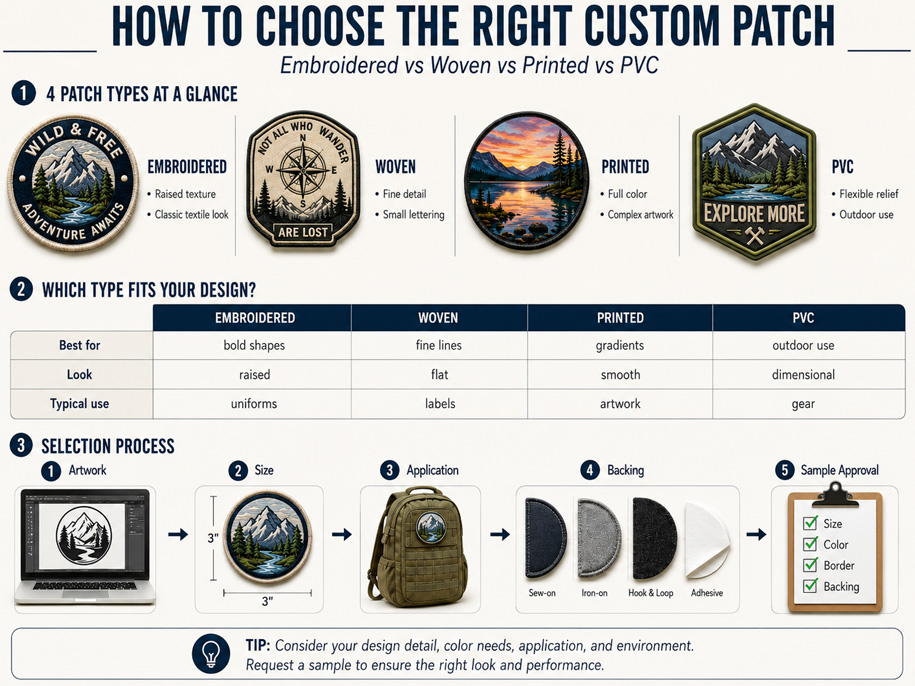
Explore when custom printed iron on patches, sublimation patches, and full color custom patches are better for photos, gradients, fine details, and smooth color transitions.
When Printing Works Better Than Thread
Improve patch performance by learning how to digitize logo for embroidery, select suitable patch backing, and optimize stitch density embroidery for clean, durable results.
Inside a Custom Embroidered Patch: What Determines Quality?