Home ●Case Studies ●News ●The History and Significance of Badges: A Deep Dive into an Iconic Accessory ●
The History and Significance of Badges: A Deep Dive into an Iconic Accessory
author: Jane
2024-12-24
Introduction: In the world of fashion and accessories, badges have long held a unique place, serving not only as a decorative element but also as a powerful symbol of identity and affiliation. This article delves into the rich history and significance of badges, exploring their evolution from simple identifiers to the iconic accessories they are today.
Historical Overview: Badges have been used for centuries, with early examples dating back to the Roman Empire where they were used to denote military rank and achievements. Fast forward to the Middle Ages, badges were employed by guilds to signify membership and craft specialization. The Industrial Revolution saw a surge in the production of badges, as they became popular as promotional items and symbols of affiliation for various social and political movements.
Significance in Modern Times: In contemporary society, badges continue to hold a significant place. They are used to express personal style, affiliation with a group or cause, and to commemorate events or achievements. From the iconic "I Voted" stickers to the pins worn by supporters of various political campaigns, badges are a visible and tangible way to showcase one's beliefs and affiliations.
Cultural Impact: Culturally, badges have played a crucial role in various movements. The 1960s and 1970s saw an explosion of badge use in the civil rights and anti-war movements, with individuals wearing badges to show solidarity and support. In the music and pop culture realms, badges have been used to promote bands, festivals, and iconic figures, becoming collectibles for fans.
Customization and Personal Expression: One of the most exciting aspects of badges is their customization. Today, with advancements in technology and manufacturing, individuals and organizations can create custom badges that reflect their unique identity. Whether it's for a corporate event, a school function, or a personal collection, the ability to design and produce badges that are tailored to specific needs has made them more popular than ever.
Material and Design Evolution: The materials used in badge production have also evolved, with modern badges now being made from a variety of materials, including metal, enamel, plastic, and even eco-friendly options. Design-wise, badges have transitioned from simple emblems to intricate works of art, with detailed imagery and complex structures that reflect the creativity and craftsmanship of their makers.
Collecting and Memorabilia: Badge collecting has become a niche hobby for many, with some badges gaining significant value over time, especially those associated with historical events or rare editions. They are not only seen as fashion accessories but also as pieces of memorabilia that hold sentimental and monetary value.
Conclusion: Badges are more than just decorative pins; they are a reflection of our history, culture, and personal identity. As we look to the future, it's clear that badges will continue to evolve, adapting to new trends and technologies while maintaining their status as an iconic accessory that speaks volumes about the wearer.
In our next article, we will explore the latest trends in badge design and how they are being used in various industries today, staying true to their historical roots while pushing the boundaries of what's possible in this fascinating world of wearable expression.
Exhibition Experience at Canton Fair
Why do Customers Repeatedly Place Orders with Us
Related Article
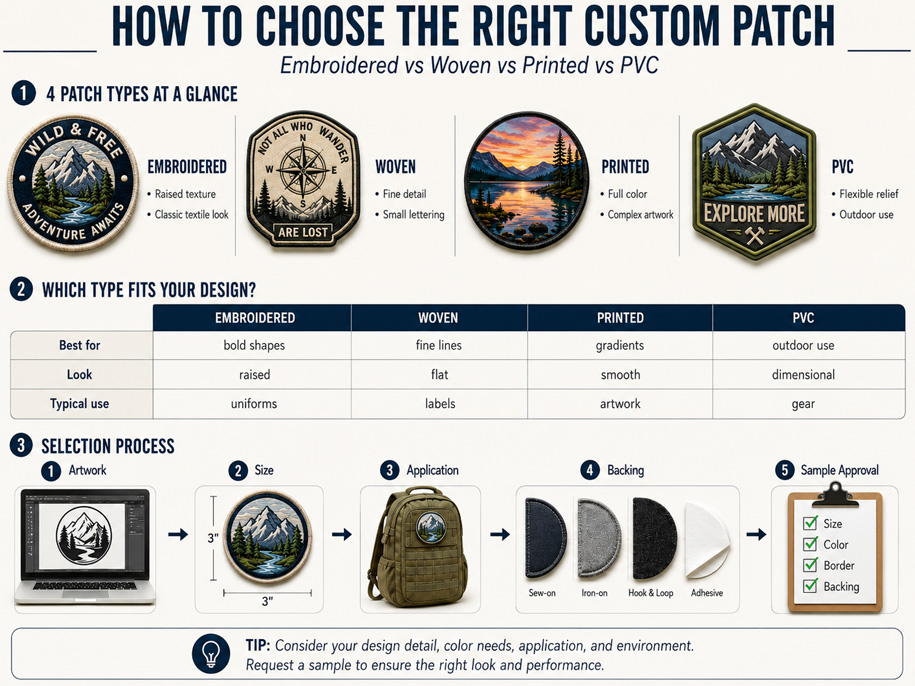
Explore when custom printed iron on patches, sublimation patches, and full color custom patches are better for photos, gradients, fine details, and smooth color transitions.
When Printing Works Better Than Thread
Improve patch performance by learning how to digitize logo for embroidery, select suitable patch backing, and optimize stitch density embroidery for clean, durable results.
Inside a Custom Embroidered Patch: What Determines Quality?