The Art of Custom Embroidery Patches
author: Jennifer
2025-06-13
The Birth of an Idea
Every custom patch begins with a story. For motorcycle mechanic-turned-designer Mike Reynolds, it started when his biking club wanted something more permanent than printed T-shirts. "We needed patches that could survive rain, grease, and years of adventures," he recalls. This need for durability mixed with personal expression captures why patches remain timeless in our digital age.
Unlike digital designs that live on screens, patches become physical extensions of identity. Whether it's a brewery's mascot, a military unit's insignia, or a student club's logo, that first sketch carries the weight of belonging. Designer Elena Martinez explains: "You're not just drawing artwork—you're creating a badge of honor people will wear against their skin."
The Alchemy of Design & Technique
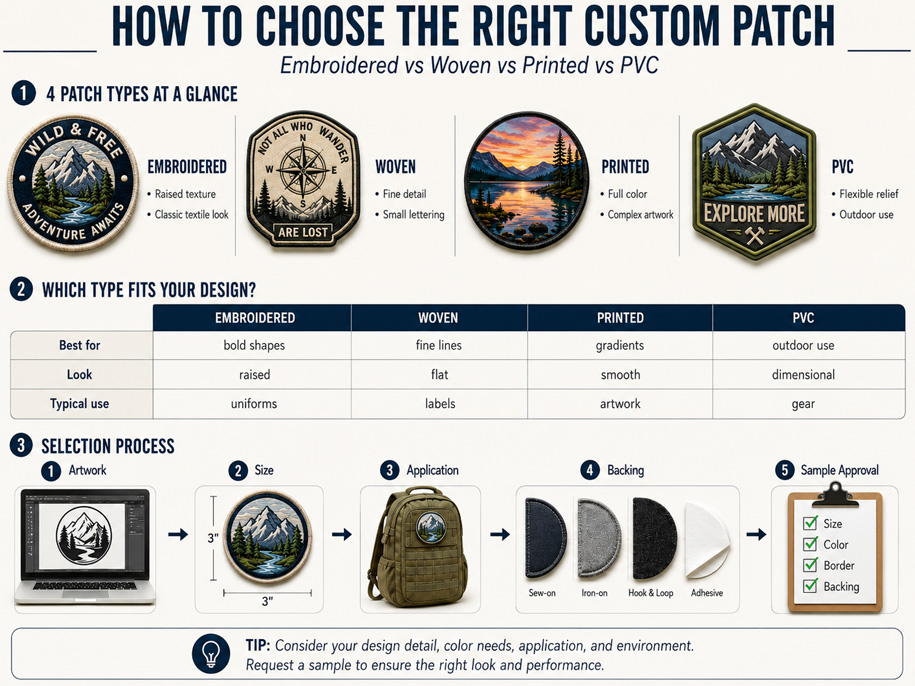
Translating ideas into thread is where artistry meets physics. Bold shapes stitch better than delicate lines; limited color palettes create clearer definitions. Veteran patch maker David Kwan demonstrates with a client's eagle design: "Those feather details? We convert them into layered stitches—optical illusion with thread."
The choice of materials becomes part of the narrative:
1. Thread: Polyester for weather resistance, rayon for sheen, metallic for luxury
2. Backing: Iron-on for convenience, sew-on for permanence
3. Edging: Merrow for classic texture, laser-cut for modern crispness
Digital tools help simulate outcomes, but as production manager Sofia Chen notes:
"The real test comes when the needle hits the fabric. That's when we see if our math matched the magic."
Machines, Hands, and the Human Touch
Modern embroidery machines are marvels of precision—12 needles working simultaneously at 1,000 stitches per minute. Yet walk through any workshop, and you'll find artisans adjusting tensions, realigning hoops, and catching flaws invisible to algorithms.
For special editions, craftspeople add hand-stitched details. At Chicago's Iron & Thread studio, owner Luis Rivera shows a biker gang's anniversary patch: "The gold trim? Hand-wrapped. That depth of texture says 'we care.'" Even mass-produced patches undergo final human inspection—a quality control ritual dating back to 19th-century military insignia makers.
Beyond Decoration: Patches as Living History
Finished patches embark on journeys their creators never imagine:
1. A firefighter's unit patch passed down to his son
2. A concert wristband patch repurposed into a wedding bouquet wrap
3. Vintage 1970s protest patches displayed in a museum
Collector Amina Joshi curates patches like others collect stamps: "Each one captures a moment—who made it, who wore it, what they stood for." This emotional durability explains why patches thrive despite digital alternatives. As designer Mark Fisher puts it: "An NFT can't get coffee stains or battlefield mud. That's what makes patches real."
Why Thread Still Matters
In an era of ephemeral digital branding, custom embroidery patches endure because they offer something visceral. They’re tactile—the raised threads invite touch. They’re durable—surviving washes, adventures, and time. Most of all, they’re human: imperfect, personal, and proudly analog. As designer Raj puts it, “A patch isn’t just seen. It’s felt.” They satisfy primal human needs: to belong, to remember, and to leave tangible marks of our passage. From sketchpad to sewing machine to jacket sleeve, they represent the perfect marriage of technology and soul—one stitch at a time.
How to Make Keychains? A Guide to Crafting PVC, Embroidery, and Acrylic Custom Keychains
Shenzhen Green Home Technology Co., Ltd. introduces intelligent production lines to upgrade production capacity, helping customers seize market opportunities
Related Article

Explore when custom printed iron on patches, sublimation patches, and full color custom patches are better for photos, gradients, fine details, and smooth color transitions.
When Printing Works Better Than Thread

Improve patch performance by learning how to digitize logo for embroidery, select suitable patch backing, and optimize stitch density embroidery for clean, durable results.
Inside a Custom Embroidered Patch: What Determines Quality?