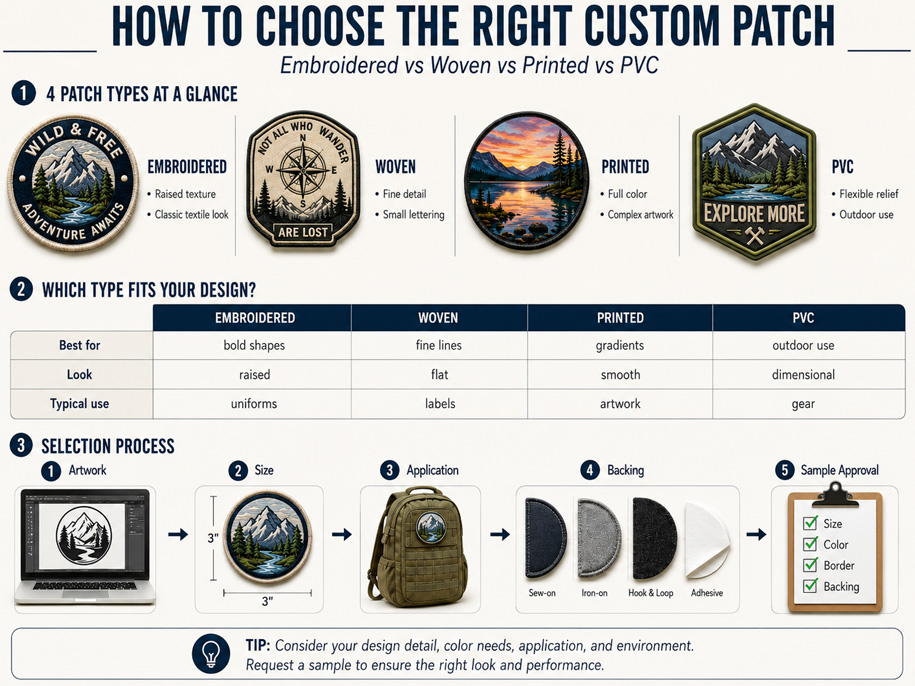
The Ultimate Guide to Custom PVC Patches: Materials, Process, and Applications
author: Cindy
2025-08-29

In the evolving world of custom branding and durable product identification, custom PVC patches have emerged as a premier choice for businesses and organizations seeking long-lasting emblems. These versatile patches, made from pliable polyvinyl chloride, offer unmatched durability, visual appeal, and customization potential. For industry professionals and potential clients seeking premium customization solutions, understanding the intricacies of PVC patches is essential. This comprehensive guide delves into the manufacturing process, material properties, diverse applications, and key benefits of these innovative products.
What Are PVC Patches?
PVC patches are custom-shaped emblems crafted from softened polyvinyl chloride material into molded designs. Unlike traditional stitched embroidery, PVC patches are three-dimensional objects with a slightly raised, rubber-like texture. They can be produced in virtually any color, shape, or size, with meticulous detail captured through custom molding processes. The material's inherent properties allow for exceptional durability, weather resistance, and color retention that far exceeds conventional fabric patches.
The manufacturing process begins with PVC resin as the foundational material, compounded with stabilizers, plasticizers, fillers, and colorants to achieve specific performance characteristics and visual properties. This versatile formulation can be adjusted to create patches ranging from soft, flexible textures to rigid, high-hardness surfaces capable of withstanding demanding environmental conditions.

The Customization Process: From Concept to Finished Product
1. Design Creation
The PVC patch customization process begins with design conceptualization. Customers provide logo artwork or design ideas, which are then translated into technical specifications suitable for mold creation. Design considerations include:
Shape complexity (simple geometric forms to intricate logos)
Color selection (vibrant custom colors with Pantone matching)
Dimensional specifications (size and thickness requirements)
Special effects (transparent elements, glow-in-the-dark features, or metallic finishes)
2. Mold Fabrication
Once the design is finalized, precision molds are crafted typically from steel or aluminum. These molds capture every detail of the design and are crucial for achieving high-fidelity reproduction of complex logos and lettering. Mold fabrication requires specialized CNC machining and engraving expertise to ensure precise dimensional accuracy.

3. Material Preparation and Compression Molding
The PVC material preparation follows a standardized yet highly precise process:
Raw material compounding: PVC resin is blended with stabilizers, lubricants, fillers, and color-determining pigments
High-speed mixing: Ingredients are thoroughly combined in automated mixing equipment to ensure homogeneous distribution
Extrusion and molding: The mixture is fed into extrusion equipment where it undergoes thermal processing at high temperatures (typically 120°C or higher), transforming into a molten state that is injected into the custom molds
Curing and cooling: The molded patches undergo controlled cooling to maintain their structural integrity and precise dimensional specifications
4. Secondary Processing and Finishing
After molding, patches undergo several finishing processes:
Die-cutting or laser cutting to achieve precise edge profiles
Surface treatments including embossing, textured patterns, or special coatings
Attachment method application (adhesive backing, sewing loops, or magnetic fixings)
Quality inspection and individual packaging
Advanced Materials and Technical Specifications

PVC patches utilize sophisticated material formulations tailored to specific application requirements:
Base Material Composition:
PVC resin as the primary polymer base
Plasticizers (such as dioctyl phthalate) for flexibility adjustment
Stabilizers (including potassium-zinc compounds) for thermal protection during processing
Colorants and pigments for visual appeal
Performance additives for UV resistance, anti-fungal properties, and enhanced durability
Material Properties:
Excellent abrasion resistance and tear strength
Chemical resistance against oils, greases, and common solvents
Waterproof characteristics with minimal moisture absorption
Temperature tolerance ranging from -40°C to 80°C
UV stability for color retention in outdoor applications
Attachment Methods: Versatile Application Options
PVC patches can be customized with various attachment mechanisms:
Self-adhesive variants: Feature strong acrylic or rubber-based adhesives with protective release liners for easy application
Sew-on versions: Incorporate fabric backing with reinforced loops for secure stitching
Iron-on models: Thermally activated adhesive systems that bond securely to fabrics when heated
Magnetic options: Integrated magnetic layers for temporary display on metal surfaces
Velcro-compatible: Hook-and-loop fastener systems for interchangeable placement
Industries and Applications: Meeting Diverse Needs

The versatility of PVC patches has led to their adoption across numerous sectors:
1. Corporate Branding and Promotion
Workplace apparel identification and branding
Promotional items and giveaway products
Product certification labels and quality seals
2. Outdoor and Sporting Goods
Durable equipment labeling for backpacks, tents, and sporting equipment
Team identification patches for uniforms and gear
Repair solutions for outdoor equipment including inflatable products
3. Government and Military
Unit identification patches with extreme durability
Tactical gear markings that withstand harsh environments
Recognition devices for equipment and personnel

4. Fashion and Apparel
Designer embellishments for clothing, bags, and accessories
Limited edition markings for collectible apparel
Trendy decorative elements on consumer fashion
5. Specialized Industrial Applications
Equipment labeling for machinery and instruments
Safety identification patches for hazardous environments
Technical information labels requiring extreme durability
Quality Assurance and Testing Protocols
Reputable PVC patch manufacturers implement rigorous quality control measures:
Physical property testing: Evaluating tensile strength, elongation, and tear resistance
Adhesion performance: Assessing bond strength for self-adhesive variants
Environmental testing: Verifying performance under UV exposure, temperature cycling, and humidity
Chemical resistance: Testing against solvents, oils, and cleaning agents
Abrasion resistance: Ensuring surface durability under repetitive friction
Color fastness: Verifying pigment stability under various environmental conditions
Future Trends and Innovations in PVC Patches

The PVC patch industry continues to evolve with several emerging trends:
Sustainable formulations: Bio-based PVC and recyclable material developments
Integrated functionality: Incorporation of RFID, NFC, and smart technology elements
Advanced surface effects: Dynamic color-shifting, photochromic, and electroluminescent options
Hybrid constructions: Combination with textiles, metals, and other materials for enhanced visual and functional properties
Digital transformation: Streamlined online ordering systems with instant quoting and design visualization tools
Conclusion: The Strategic Value of PVC Patch Customization
Custom PVC patches represent more than mere decorative elements—they are strategic branding assets that deliver tangible durability benefits across countless applications. With their exceptional resistance to environmental factors, chemical exposure, and physical abrasion, PVC patches offer unparalleled longevity compared to alternative identification methods.
The manufacturing process combines traditional craftsmanship with advanced polymer technology, resulting in products that faithfully reproduce intricate designs while withstanding demanding operating conditions. From corporate branding programs to technical equipment labeling, these versatile emblems provide reliable identification solutions that maintain their visual appeal through years of service.
For businesses seeking to enhance their product identification, branding initiatives, or aftermarket repair solutions, custom PVC patches offer a compelling combination of visual impact, technical performance, and cost-effectiveness. By partnering with experienced manufacturers who maintain rigorous quality standards and material traceability, organizations can develop custom patch solutions that effectively represent their brands while standing up to their specific operational environments.
As the industry continues to innovate with new materials, manufacturing techniques, and functional enhancements, PVC patches will undoubtedly remain at the forefront of durable identification and branding solutions for years to come.

Why Iron-On Embroidered Patches Are Dominating the Custom Apparel Industry
The Evolution of Acrylic Keychain Materials: Beyond Basic Plastics
Related Article

Explore when custom printed iron on patches, sublimation patches, and full color custom patches are better for photos, gradients, fine details, and smooth color transitions.
When Printing Works Better Than Thread

Improve patch performance by learning how to digitize logo for embroidery, select suitable patch backing, and optimize stitch density embroidery for clean, durable results.
Inside a Custom Embroidered Patch: What Determines Quality?