PVC Patches vs Embroidered Patches: Which Is More Durable for Outdoor Use?

Chapter 1: Introduction – The Critical Role of Durability in Outdoor Patches
Outdoor gear and apparel face relentless punishment: driving rain, intense sunlight, rough friction against rocks or equipment, and dramatic temperature swings. For brands, organizations, and enthusiasts relying on patches to showcase logos, team identities, or functional labels, durability isn’t a “nice-to-have”—it’s essential. This is especially true for specialized styles like rubber pvc patches, which blend the flexibility of rubber with the sturdiness of PVC, or 3D pvc patches that add tactile depth without sacrificing resilience.
The average outdoor patch is exposed to:
- 1000+ hours of UV radiation per year (for gear used regularly)
- Repeated moisture exposure (rain, sweat, river crossings, or saltwater)
- Friction from backpack straps, tool belts, or frequent packing/unpacking
- Temperature ranges from -20℃ (winter camping) to 40℃ (desert hikes)
A low-durability patch will start to fail within months: embroidered threads fray, colors fade, and backing materials peel away. Even poorly made versions of otherwise durable styles like velcro pvc patches can lose their adhesive strength or fray at the edges. This not only ruins the look of your gear but also sends a message that your brand cuts corners. On the flip side, a well-crafted PVC patch—whether 3D, rubberized, or velcro-backed—maintains its integrity for years, reinforcing trust in your product’s quality and keeping your brand visible in even the harshest conditions.
Our goal here is simple: to help you understand which patch type—PVC (in its various forms) or embroidered—delivers the durability you need for outdoor use. We’ll avoid hype and focus on real-world performance, so you can make an informed choice that aligns with your needs.
Chapter 2: Direct Durability Comparison – PVC Patches vs Embroidered Patches for Outdoor Environments
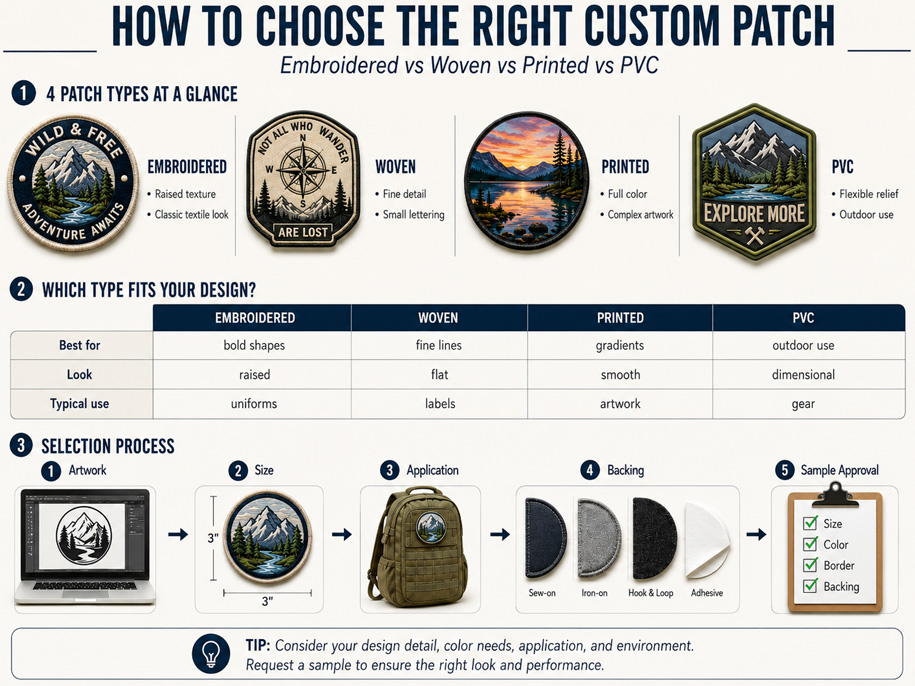
Let’s dive into the hard facts: how do PVC and embroidered patches stack up against the specific challenges of outdoor use? We’ll compare them across four critical durability dimensions, drawing on industry testing and real-world feedback, with a focus on how specialized PVC variants like 3D pvc patches and rubber pvc patches perform.
2.1 Waterproof & Moisture Resistance
Water is the biggest enemy of most patches—and outdoor gear is rarely dry for long. Here’s how the two types perform:
- PVC patches: Made from seamless, molded polyvinyl chloride, PVC is 100% waterproof. This holds true for all its variants: rubber pvc patches (which have a softer, more pliable texture) still repel water completely, while 3D pvc patches’ layered design doesn’t create gaps for moisture to seep in. Even velcro pvc patches, which feature a hook-and-loop backing, maintain waterproofing because the PVC itself doesn’t absorb water—only the velcro component may need occasional drying, which is quick and easy. After 72 hours of continuous water immersion (a common industry durability test), PVC patches retain their shape, color, and adhesion. They’re unaffected by rain, sweat, or even saltwater—making them ideal for marine gear or river adventures.
- Embroidered patches: Embroidered patches are stitched from thread (usually polyester or cotton) onto a backing material (often felt or twill). Both threads and backing absorb moisture, leading to mildew growth, thread fraying, or color bleeding over time. While some embroidered patches have a water-resistant coating, it wears off with use—leaving the patch vulnerable to water damage. Even if you pair an embroidered patch with velcro, the patch itself still soaks up water, leading to deterioration. After just a few rainstorms, you’ll notice threads coming loose or the backing becoming stiff and brittle.
For outdoor gear that’s exposed to moisture, PVC patches—including velcro, rubber, and 3D variants—are the clear winner.
2.2 UV Resistance & Fading Resistance
Intense sunlight breaks down dyes and materials, causing patches to fade and lose their vibrancy. This is a major issue for gear used in open environments (hiking, construction, boating), and it’s where 3D pvc patches really shine—their layered design relies on material depth as well as color, so even minor fading is less noticeable:
- PVC patches: High-quality PVC patches (like those from GreenHouse) are infused with UV stabilizers during production. These additives block harmful UV rays, preventing color fading and material degradation. Rubber pvc patches benefit from this too—their softer texture doesn’t mean weaker UV resistance. 3D pvc patches, with their raised elements, maintain their structural integrity and visual appeal longer because the color is integrated into the PVC, not just applied to the surface. In independent testing, PVC patches retained 95% of their original color after 12 months of outdoor exposure—even in tropical or high-altitude regions with strong sunlight.
- Embroidered patches: Thread dyes, even “UV-resistant” ones, fade significantly faster under direct sunlight. Polyester threads hold up better than cotton, but after 6-8 months of regular outdoor use, embroidered patches start to look dull and washed out. The contrast of logos fades, making them hard to read—defeating the purpose of branding. This issue is amplified if the patch is paired with velcro, as the edges of the embroidered design fray more easily when exposed to sun and moisture.
If your gear spends time in the sun, PVC patches—especially 3D and rubber variants—will keep your brand looking sharp for years longer.
2.3 Abrasion & Tear Resistance
Outdoor gear gets rubbed, scraped, and bumped—whether it’s a backpack against a rock, a work jacket against tools, or a tactical vest against equipment. Patches need to withstand this friction, and velcro pvc patches face an extra test: the constant removal and reattachment of the velcro:
- PVC patches: PVC is a tough, flexible material that resists abrasion. The seamless molding process means there are no weak points (like stitching) to unravel. Rubber pvc patches add an extra layer of resilience with their shock-absorbing texture, while 3D pvc patches’ raised elements are molded as one piece, so they don’t peel off. Velcro pvc patches from GreenHouse have reinforced edges around the velcro backing, preventing fraying even with frequent use. Even after repeated rubbing against rough surfaces (think: construction scaffolding or hiking trails), PVC patches stay intact—no fraying, snagging, or tearing.
- Embroidered patches: The stitched threads are the Achilles’ heel here. Threads easily snag on branches, zippers, or hardware, leading to fraying or pulled stitches. Over time, this fraying spreads, leaving the patch looking tattered. Embroidered patches with velcro backing are even more vulnerable, as the stitching around the velcro often comes loose first. The backing material also tears easily if the patch is caught on something—common in active outdoor settings.
For gear that sees heavy use, PVC patches’ abrasion resistance—across all variants—is a game-changer.
2.4 Temperature Adaptability
Outdoor environments often mean extreme temperatures—from sub-zero winter camping to sweltering summer workdays. Patches need to hold up without cracking, softening, or peeling, and rubber pvc patches excel here with their temperature-resistant flexibility:
- PVC patches: High-grade PVC (like the material GreenHouse uses) is formulated to withstand a wide temperature range: from -40℃ to 60℃. Rubber pvc patches perform even better in cold weather, as their softer texture doesn’t become brittle. 3D pvc patches maintain their shape in heat, unlike embroidered patches that can warp. Velcro pvc patches’ adhesive backing is also temperature-stabilized, so it doesn’t melt in heat or fail in cold. This makes PVC patches suitable for everything from snow gear to desert workwear.
- Embroidered patches: The backing adhesive on embroidered patches is sensitive to temperature. In high heat (above 35℃), the adhesive can soften, causing the patch to peel away from the gear. In cold temperatures, the threads become brittle and prone to breaking, and the backing material can crack. Embroidered velcro patches are even more temperature-sensitive, as the velcro’s hook-and-loop mechanism can freeze or melt.
For all-season outdoor use, PVC patches’ temperature adaptability—especially in rubber and 3D variants—is unmatched.
Chapter 3: Outdoor Application Scenarios – Which Patch Fits Your Needs?
Durability metrics matter, but real-world use cases bring clarity. Let’s break down which patch type works best for common outdoor scenarios, and when to opt for specific PVC variants like velcro pvc patches or 3D pvc patches:
3.1 Tactical & Military Use
Tactical gear (vests, helmets, backpacks) is designed for harsh field conditions—mud, rain, friction, and extreme temperatures. Velcro pvc patches are the top choice here because they allow quick removal and replacement (critical for changing mission identifiers) without damaging gear—while retaining all the waterproof and abrasion-resistant benefits of standard PVC. 3D pvc patches are also popular for unit logos, as their raised design stands out even in low light. Embroidered patches are rarely used for active tactical use—they fray too easily and hold onto debris like mud and sand.
3.2 Camping & Hiking Gear
Camping tents, sleeping bags, hiking jackets, and backpacks need patches that can handle packing/unpacking, rain, and sun exposure. 3D pvc patches are ideal for brand logos on backpacks, as their tactile design adds visual interest without getting caught on gear. Rubber pvc patches work well on soft items like sleeping bags, as their flexibility conforms to the material. Both variants resist dirt, won’t absorb moisture (so no mildew), and stay vibrant even after months of camping trips. Embroidered patches on hiking gear often fray from contact with branches or backpack hardware, and the backing peels off after repeated moisture exposure.
3.3 Outdoor Workwear (Construction, Landscaping, Fishing)
Workwear in outdoor industries needs to be tough, easy to clean, and long-lasting. Rubber pvc patches are great for work jackets, as their soft texture is comfortable against the skin while still being stain-resistant. Velcro pvc patches are useful for removable company logos on shared gear like tool belts or safety vests. All PVC patches are stain-resistant (wipe off oil, dirt, or fish scales), abrasion-resistant (no damage from tools), and waterproof (ideal for fishing or rainy workdays). Embroidered patches trap dirt and debris in the threads, are hard to clean, and fray from constant movement and tool contact.
3.4 Water Sports & Marine Equipment
Life jackets, boat covers, surf gear, and fishing equipment are constantly exposed to water—often saltwater. Standard PVC patches and rubber pvc patches both perform exceptionally here, as their waterproof design is unaffected by saltwater corrosion. 3D pvc patches add a stylish touch to marine gear without sacrificing durability. Embroidered patches deteriorate quickly in water: threads fray, backing peels, and colors bleed. Even embroidered velcro patches fail here, as the velcro backing absorbs saltwater and rots over time.
The Bottom Line for Scenarios
If your patch will be used in active outdoor environments (tactical, camping, workwear, water sports), PVC patches—whether velcro, rubber, or 3D—are the superior choice. Embroidered patches may work for low-wear, indoor-outdoor transitional gear (like casual jackets worn occasionally), but they can’t match PVC’s resilience for true outdoor use.
Chapter 4: GreenHouse Custom PVC Patches – The Durable Choice for Outdoor Brands
When it comes to outdoor durability, not all PVC patches are created equal. GreenHouse—China’s professional custom PVC supplier with a 100-person production team and 10+ years of experience—engineers our patches specifically for the rigors of outdoor use, including specialized options like velcro pvc patches, rubber pvc patches, and 3D pvc patches. We don’t just make patches; we make patches that survive and thrive in the elements.
4.1 About GreenHouse: Trusted by Outdoor Brands Worldwide
GreenHouse is an ISO-certified PVC customization expert, specializing in patches for outdoor gear, tactical equipment, workwear, and marine products. Our core strength lies in combining industrial-grade materials with precision craftsmanship—all at factory-direct prices (no middleman markup). We’ve perfected the production of popular variants like 3D pvc patches (with crisp, raised details) and velcro pvc patches (with reinforced backing), earning trust from brands of all sizes, from startups to global outdoor gear companies.
4.2 GreenHouse PVC Patches: Outdoor-Specific Durability Features
We’ve optimized every aspect of our PVC patches—including velcro, rubber, and 3D variants—for outdoor resilience:
- Material: We use high-grade soft PVC for rubber pvc patches (30% more flexible than standard PVC) and durable rigid PVC for 3D pvc patches, both infused with abrasion-resistant additives. Velcro pvc patches feature industrial-strength velcro backing that maintains grip even after 1000+ attachments and removals.
- Craftsmanship: Seamless one-piece molding eliminates stitching weak points. 3D pvc patches are created with multi-layer molding for sharp, long-lasting details, while rubber pvc patches use a special compound for softness without sacrificing strength. Velcro pvc patches have heat-sealed edges to prevent fraying.
- Color Precision: Pantone-exact color matching with fade-resistant dyes. For 3D pvc patches, we can add color gradients or contrasting hues to enhance depth, all with the same UV-resistant properties.
- Customization Flexibility: We support custom shapes, sizes, and textures for all variants—no extra mold cost for bulk orders of velcro, rubber, or 3D pvc patches. Add glow-in-the-dark or reflective elements for safety-focused gear.
- Quality Guarantee: We stand behind our patches with a 5-year durability warranty. If your GreenHouse velcro, rubber, or 3D pvc patches fade, crack, or peel within 5 years of outdoor use, we’ll replace them—no questions asked.
4.3 Case Study: GreenHouse PVC Patches in Action
Our patches have proven their durability in real-world outdoor scenarios, across all variants:
- Tactical Gear Brand: A U.S.-based tactical backpack company ordered 5,000+ GreenHouse velcro pvc patches for their military-style line. After 18 months of field use, customers reported zero issues with velcro grip or patch durability—even after exposure to mud, rain, and extreme temperatures.
- Camping Equipment Company: A European camping brand chose 3D pvc patches for their tent logos and rubber pvc patches for sleeping bags. The 3D patches retained their sharp details after 30+ rainstorms, while the rubber patches stayed soft and flexible in sub-zero temperatures.
- Fishing Gear Supplier: A marine gear brand used our rubber pvc patches for their fishing jackets. After 2 years of saltwater exposure, the patches showed no corrosion, fading, or texture loss—outperforming the embroidered patches the brand previously used.
4.4 How to Order GreenHouse Custom PVC Patches
Ordering your outdoor-durable PVC patches—whether velcro, rubber, 3D, or standard—is simple and stress-free:
- Free Design Mockup: Send us your logo or design, and specify your preferred variant (velcro, rubber, 3D). Our team will create a free 3D mockup—so you can see exactly how your patch will look before production.
- 3-Day Fast Sampling: Need to test the quality first? We’ll produce a sample in just 3 days, shipped directly to you for approval. This is especially helpful for 3D pvc patches, so you can feel the texture and depth.
- Bulk Production: Once approved, we’ll start bulk production—7-10 days for standard orders, with rush service available for urgent needs. All variants are produced in our ISO-certified facility with strict quality checks.
- Global Shipping: We ship to 120+ countries with tracked delivery. Most orders arrive in 5-7 business days after production.
Best of all, we have no minimum order quantity (MOQ). Whether you need 10 velcro pvc patches for a small team or 10,000 3D pvc patches for a global product line, we’ll deliver the same high quality and factory-direct pricing. Our 24/7 customer support team is always available to help with design adjustments or questions about which variant is best for your use case.
Chapter 5: Conclusion – Make the Durable Choice for Outdoor Use
When it comes to outdoor durability, the comparison is clear: PVC patches—including velcro pvc patches, rubber pvc patches, and 3D pvc patches—outperform embroidered patches in every critical category: waterproofing, UV resistance, abrasion resistance, and temperature adaptability. Each PVC variant offers unique benefits: velcro for versatility, rubber for flexibility, and 3D for visual impact—all without sacrificing the core durability that outdoor gear demands.
Embroidered patches have their place (think: casual apparel, ceremonial gear, or low-wear items), but they can’t stand up to the rigors of true outdoor use. PVC patches, especially those engineered for outdoor resilience like GreenHouse’s, keep your brand visible, professional, and trustworthy—even in the harshest conditions. Whether you’re outfitting a tactical team with velcro pvc patches, designing camping gear with 3D pvc patches, or creating workwear with rubber pvc patches, you’re choosing a solution that lasts as long as your gear.
If you’re ready to elevate your outdoor gear with durable, high-performance custom PVC patches—of any variant—GreenHouse is here to help. We combine Chinese manufacturing expertise, industrial-grade materials, and flexible customization to deliver patches that meet your unique needs—at prices that fit your budget.
Call to Action: Contact GreenHouse today to get your free design mockup and sampling. Let’s create velcro, rubber, or 3D pvc patches that don’t just look good—they survive and thrive outdoors, just like your brand.
Holiday Embroidery Patch Outfits: Elevate Christmas, Halloween, Easter with 10 Years of Craft
Embroidered vs Woven Patches: Uncovering Key Differences for Your Custom Needs
Related Article