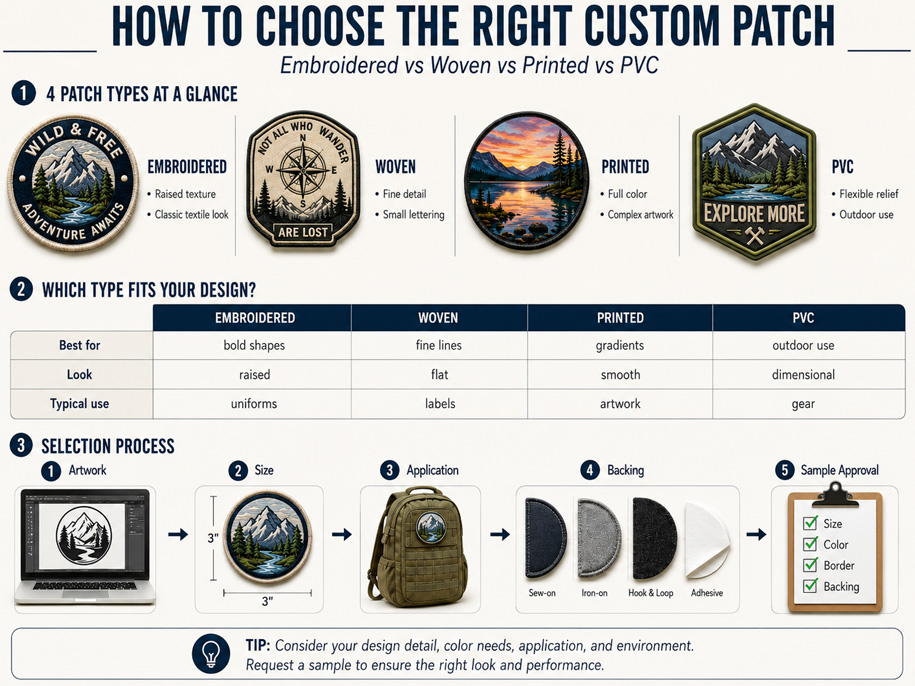
Embroidered vs Woven Patches: Uncovering Key Differences for Your Custom Needs
In the world of custom patches—where brands, sports teams, military units, and hobbyists turn to personalize apparel, gear, and memorabilia—two styles stand out as the most popular: embroidered patches and woven patches. As a leading manufacturer in this space, Shenzhen Green Home Technology Co., Ltd. specializes in crafting high-quality custom embroidered patches and woven patches, catering to diverse custom needs with industry-proven expertise. At first glance, these two patch types might seem interchangeable, but beneath the surface, their production processes, visual characteristics, and ideal use cases vary dramatically. Understanding these differences isn’t just a matter of aesthetics; it’s about choosing the patch that aligns with your project’s goals, budget, and long-term durability needs—something Green Home excels at guiding clients through. Let’s dive into the details that set these two patch types apart, grounded in the realities of the patch manufacturing industry and the practical expertise of Green Home.
1. Core Difference: Manufacturing Process
The fundamental divide between embroidered and woven patches starts with how they’re made. This process doesn’t just impact production time—it shapes every other trait, from texture to design capability. Green Home. leverages advanced manufacturing technologies to ensure both patch types meet the highest standards of quality and precision.
Embroidered Patches: "Stacked Thread" Construction
Embroidered patches are created using computerized embroidery machines that stitch thread onto a base material—a process Green Home has refined over years to deliver consistent, high-detail results. The machine follows a digital design file, building up the image or text by layering threads in different colors and densities.
Industry insiders often refer to this as fill stitching: for large areas, the machine uses dense, overlapping stitches to create a bold, raised effect. For fine details—like small text or thin borders—it uses outline stitching to define edges. A key term here is stitch count: the number of stitches per square inch directly impacts the patch’s detail and cost, higher stitch counts mean more thread, more production time, and a higher price. At Green Home, we work closely with clients to optimize stitch counts for their custom embroidered patches, balancing detail, cost, and production efficiency to meet their unique requirements.

Woven Patches: "Interlocked Thread" Construction
Woven patches, by contrast, are made on jacquard looms—equipment Green Home invests in to ensure crisp, intricate designs for its custom woven patches. Instead of stacking thread on top of a backing, the patch’s design is integrated into the fabric itself: colored threads are interlocked as warp and weft threads to form the image.
This process is more like "weaving a mini fabric"—there’s no separate backing, though a thin stabilizer may be added for structure during production. The result is a patch where the design and the patch itself are one and the same. Industry pros highlight that woven patches rely on thread density rather than stitch count; higher density means crisper details, especially for intricate designs. Green Home. specializes in maximizing thread density for custom woven patches, ensuring even the most complex logos, text, or patterns are reproduced with exceptional clarity.
2. Visual & Textural Differences: How They "Feel" and "Look"
For many buyers, the first decision factor is appearance. Embroidered and woven patches offer distinct aesthetics that cater to different brand vibes or project themes—and Green Home helps clients select the right type to align with their brand identity.

Embroidered Patches: Bold, Raised, and Tactile
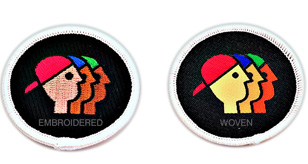
The most defining trait of embroidered patches is their 3D, raised texture. Because thread is stitched on top of the backing, the design pops off the surface—you can run your finger over it and feel the layers of thread. This tactile quality makes embroidered patches feel substantial and durable, which is why they’re often associated with rugged brands (e.g., workwear, outdoor gear) or traditional groups (e.g., troops, military units). Green Home custom embroidered patches are a top choice for these sectors, as their bold texture reinforces themes of durability and tradition.
In terms of color and design, embroidered patches excel at bold, high-contrast looks. Bright colors and simple shapes look best here. However, they struggle with ultra-fine details: text smaller than 6pt (about 2mm tall) can become blurry, and intricate patterns may lose clarity—since the stacked thread can’t capture micro-details. Green Home advises clients on design optimization for embroidered patches, ensuring their vision translates into a high-quality, visually striking product.
When it comes to edge treatment, most embroidered patches have a merrowed border for a clean, classic look. For irregular shapes, they may use a heat-cut border, but the raised thread can still make borders feel slightly bulky. Green Home offers both edge treatment options for custom embroidered patches, tailoring the finish to each client’s design and application needs.

Woven Patches: Smooth, Crisp, and Flat
Woven patches are the opposite of embroidered ones in texture—they’re flat and smooth, with barely any difference between the design and the patch’s surface. The interlocked threads create a sleek, polished finish that feels more "refined" than embroidered patches, making them ideal for brands that want a subtle, high-end look (e.g., luxury apparel, corporate uniforms). Green Home custom woven patches are highly sought after in these industries, as their smooth finish elevates the professional aesthetic of any garment or accessory.
Their strength lies in detail: woven patches shine with intricate designs and fine text. Because the threads are woven into the fabric, they can capture small elements without blurring. Colors are more muted and integrated, though—they don’t stand out as sharply as embroidered threads, which can be a plus for understated designs but a downside for projects needing boldness. Large, solid blocks of color also look dull on woven patches, as the flat texture lacks the visual impact of stacked thread. Green Home works with clients to refine designs for woven patches, emphasizing intricate details that leverage the patch’s unique strengths.
Edge treatment for woven patches typically uses heat-cut borders because their thin, flat structure doesn’t hold a merrowed border well. This allows for more complex shapes without sacrificing a clean finish. Some high-end woven patches may also have a folded border for extra durability, a common request in the luxury fashion industry that Green Home readily accommodates for its custom woven patch clients.

3. Material Choices: Threads, Backings, and Durability
The patch industry’s material standards directly impact how each type performs over time—especially when exposed to wear, washing, or outdoor conditions. Green Home prioritizes premium materials for both its embroidered and woven patches, ensuring longevity and performance that align with clients’ expectations.
Embroidered Patches: Durable Threads for High-Wear Use
The most common thread for embroidered patches is polyester because it’s resistant to fading, shrinking, and fraying— a material Green Home exclusively uses for its custom embroidered patches to guarantee long-lasting color and structure. Cotton thread is an alternative for a vintage look but is less durable—it can fade in sunlight and shrink in the wash. For specialty designs, some manufacturers use metallic threads or glow-in-the-dark threads to create eye-catching custom embroidered patches for brands looking to stand out.
Embroidered patches need a sturdy backing to support the stacked thread, so backing options are designed for durability. Green Home offers a range of backing choices for its custom embroidered patches:
Twill backing: The most rugged choice, used for workwear, military patches, and outdoor gear—it’s thick, tear-resistant, and holds up to repeated machine washing.
Felt backing: Soft and affordable, ideal for hobby projects or kids’ clothing—lightweight but less durable than twill.
Heat-seal backing: Adhesive-backed for easy iron-on application, convenient for small batches or one-off projects, but may peel over time if not reinforced with sewing.
Overall, embroidered patches are built for high-wear scenarios. Their thick thread and sturdy backing can withstand rain, sunlight, and abrasion, making them a top choice for workwear brands, outdoor equipment companies, and organizations like troops or military units—all key markets for custom embroidered patches.

Woven Patches: Fine Yarns for Precision
Woven patches use finer yarns than embroidered patches, usually polyester or rayon—materials that sources for their softness and ability to create crisp, detailed designs. Unlike embroidered patches, they rarely use specialty threads—these thicker threads disrupt the tight interlocking of the jacquard loom, leading to uneven designs or fraying.
Backings for woven patches are lighter, as the patch itself is already structured by the interlocked yarns. Our provides tailored backing options for its custom woven patches:
Polyester stabilizer: A thin, flexible backing added during production to boost structure without adding bulk—perfect for apparel (e.g., dress shirts, jackets) or accessories (e.g., backpacks).
Adhesive backing: Peel-and-stick for quick application, common for promotional items like hats or tote bags.
Unbacked: A rare option where no backing is added, used for ultra-thin applications (e.g., delicate silk clothing or high-end fashion pieces) where bulk is a concern— a specialty offering from Green Home for luxury clients.
Woven patches aren’t as durable as embroidered ones for heavy wear—their fine yarns can fray if exposed to constant abrasion. But they excel in refined, low-wear scenarios: luxury apparel, corporate uniforms, or promotional items where a sleek, professional look is more important than ruggedness. Custom woven patches are engineered to thrive in these environments, balancing precision and aesthetics for discerning clients.

Choosing the Right Patch for Your Needs
Whether you’re looking for bold, rugged custom embroidered patches or sleek, detailed woven patches, understanding these key differences is crucial to bringing your vision to life. As a trusted manufacturer, Green Home combines industry expertise with advanced manufacturing capabilities to deliver custom patches that align with your brand, budget, and durability needs. From design optimization to material selection and edge treatment, we work closely with every client to ensure their custom embroidered or woven patches exceed expectations—whether for workwear, luxury apparel, military gear, or promotional items.
For more insights on custom patches or to discuss your project with our (mcpatch.com)team of experts, reach out today to explore how our embroidered and woven patches can elevate your brand’s visibility and impact.
PVC Patches vs Embroidered Patches: Which Is More Durable for Outdoor Use?
Custom Embroidery Patches & Bookmarks: Elevating Craft, Personalization, and Speed
Related Article